




US Tariffs – where to next?
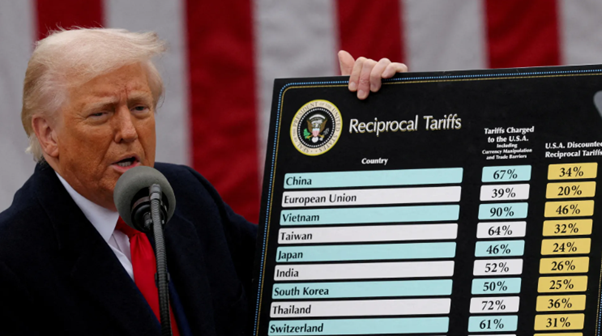
On 20 February 2026, the U.S. Supreme Court ruled that President Donald Trump lacked legal authority under the International Emergency Economic Powers Act (IEEPA) to impose broad global tariffs — a foundational element of his trade policy. Markets initially rallied on the reduction of perceived trade-driven economic risk.
In response, the administration reinstated import duties under Section 122 of the 1974 Trade Act, initially at 10% and quickly raised to 15%, valid for up to 150 days without further congressional approval. This action has reintroduced trade uncertainty, complicating market sentiment.
Market Impact Overview
U.S. Share market
- Major U.S. equity indices initially rallied on the court’s decision, reflecting relief that tariffs might be constrained. Tech and consumer discretionary names benefited.
- Renewed tariff risk has muted gains and reintroduced volatility, especially for import-dependent sectors. Futures markets have shown downside pressure.
Sector Implications
- Import-exposed sectors (retail, autos, technology): Tariff cost increases erode margins and heighten earnings uncertainty.
- Exporters: Mixed effects — some benefit from clearer rules post-court ruling; others face uncertainty over retaliatory responses
Currency & Fixed Income
- The U.S. dollar dipped on reduced trade tension expectations post-ruling, before rebounding modestly on tariff reinstatement.
- Treasury yields may face upward pressure if persistent tariff inflation feeds into higher inflation expectations or if fiscal uncertainties (e.g., potential tariff refunds) widen deficits.
Global Markets
- Equity markets globally reacted variably — Asian and European indices priced in reduced tariff risk initially and then segmented based on country exposures to U.S. demand and tariff differentials.
- Emerging markets with heavy U.S. export links (e.g., China, South Korea) face renewed trade cost risk and potential retaliatory policy responses.
Commodities & Supply Chains
- Tariff increases tend to raise input costs, potentially boosting commodity price inflation for certain metals, energy, and agricultural goods.
- Supply chain pressures could further feed into inflation expectations, potentially complicating central bank policy paths.
Strategic Investment Implications
Short-to-Medium Term
- Expect heightened volatility and risk repricing across global equities.
- Defensive and inflation-linked assets (e.g., quality bonds, commodities) may outperform in heightened uncertainty.
Credit & Rate Signals
- Higher trade costs and tariff unpredictability could dissuade aggressive central bank easing, supporting relatively higher yields and defensive credit spreads.
Key Risks to Monitor
- Legal Challenges and Policy Reversals
Further litigation or legislative action could completely reshape the tariff landscape mid-year. - Retaliatory Trade Actions
Major trading partners may respond, affecting global demand growth. - Inflation & Monetary Policy
Tariff-induced inflation could constrain rate cut strategies by the Federal Reserve. - Market Sentiment Shifts
News flow around trade negotiations and legal rulings will continue to drive short-term asset price movements.
Conclusion
The Supreme Court’s limitation on tariff authority initially reduced policy uncertainty, leading to positive market responses. However, the rapid imposition of 15% interim tariffs for 150 days has reintroduced trade risk, complicated market forecasts, and emphasized the central role of legal and legislative power in shaping U.S. trade policy. Investors should focus on managing volatility, i.e. hold less in growth assets, and hold some additional cash in these times.
Copyright © 2026 Coastline Private Wealth, All rights reserved.
Our mailing address is:
PO Box 2082
Churchlands WA 6018


