




A resilient jobs market keeps the RBA on watch
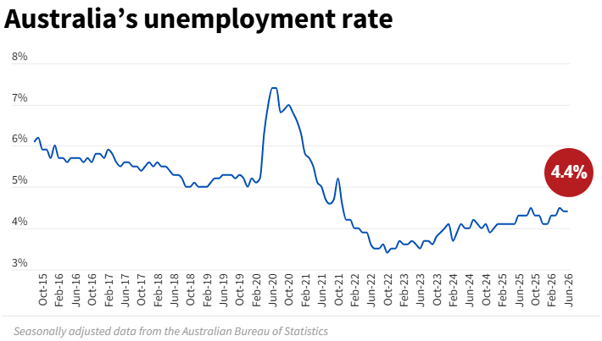
Australian markets were given a reminder this week that the economy is slowing, but not yet cracking. The latest labour force figures showed the unemployment rate holding at 4.4% in June, even as employment rose by more than 76,000 people and the participation rate climbed to 67%. In short, more Australians are looking for work, more are finding work, and the economy is still absorbing a surprisingly large number of new entrants into the labour force.
That resilience matters because inflation remains the main factor for interest rates. Headline inflation eased to 4.0% over the year to May, but the trimmed mean measure, which gives a better guide to underlying inflation pressure, rose to 3.6%. This combination leaves the Reserve Bank of Australia in an uncomfortable position: headline inflation has improved, but the stickier parts of inflation have not yet convincingly returned to target.
What changed last week?
The key surprise was not that unemployment stayed steady, but that it did so alongside a sizeable lift in employment. Around 47,000 of the new jobs were part-time, while full-time employment also increased. At the same time, the number of unemployed people rose by about 13,000, which tells us the labour market is expanding on both sides: more jobs, but also more people seeking work.
For investors, this is a mixed signal. A healthy jobs market supports household incomes and company revenues, but it also gives the RBA less room to look through persistent inflation. Markets responded accordingly, with the Australian dollar moving through US70 cents and expectations for an August rate hike lifting after the jobs data rose from 19% to 43%.
Inflation: better headline, sticker detail
The May CPI release provided some welcome headline relief, with annual inflation easing from 4.2% to 4.0%. However, the detail was less comfortable. Housing costs rose 6.5% over the year, while food and non-alcoholic beverages and transport each rose 3.3%. The trimmed mean measure increased from 3.4% to 3.6%, suggesting that underlying inflation is still proving difficult to contain.
This is why the next inflation data point will be so important. The RBA does not need the economy to collapse to keep rates on hold, but it does need evidence that inflation is moving sustainably back toward the 2–3% target band. Until that evidence is clearer, interest rate volatility is likely to remain a feature of markets.
Our view
The balance of risks has shifted slightly back toward higher-for-longer interest rates. However, the investment response should remain measured. A single rate hike, if it does occur, would not change the long-term case for diversified portfolios, but it may extend the period in which markets remain sensitive to inflation data, wage outcomes and central bank language.
We continue to favour portfolios that combine quality growth assets, appropriate defensive exposure, and enough liquidity to meet short term needs. The objective is not to predict every data point or RBA decision, but to remain positioned for a range of outcomes: inflation that proves sticky, growth that slows, or a more benign path where inflation eases without a sharp rise in unemployment.
In short, the Australian economy is still bending rather than breaking. That resilience is positive, but it also means the RBA may need to stay cautious for longer. For investors, this is a time to be deliberate, diversify and focused on the plan rather than the noise.
Copyright © 2026 Coastline Private Wealth, All rights reserved.
Our mailing address is:
PO Box 2082
Churchlands WA 6018


